VibeCoded Orchestrator: The Free Claude Code Extension That Makes Agentic AI Actually Work
The agentic AI wave is here. Claude AI, OpenAI, GitHub Copilot, and a growing ecosystem of AI tools have fundamentally changed how software gets written. But as any serious AI developer knows — raw model capability is only half the equation. The other half is infrastructure: how you manage context, memory, secrets, and parallel workstreams without your AI agent going off the rails.
That is exactly the gap VibeCoded Orchestrator fills. It is a free, open-source wrapper around the Claude Code extension for VS Code that dramatically upgrades what a single AI agent can do — without requiring you to build your own multi-agent framework from scratch.
At Codiantech, we specialise in AI-powered software development, custom CMS solutions, and agentic AI integrations for businesses. VibeCoded Orchestrator is precisely the kind of tool our engineering teams evaluate — and it represents the direction serious AI development is heading in 2025.
What Is VibeCoded Orchestrator and Why Does It Matter?
The artificial intelligence tooling space is crowded. You have code editors with built-in AI like GitHub Copilot, standalone chat interfaces like Claude AI, Gemini, and ChatGPT, and increasingly complex multi-agent orchestration platforms. Most developers building agentic AI workflows end up either over-engineering or under-building.
VibeCoded Orchestrator takes a different approach: instead of reinventing the wheel, it extends what already works. Claude Code's VS Code extension is already excellent at writing and editing code. The Orchestrator adds the missing layers — memory, context, secrets, and parallelism — that turn a capable AI coding assistant into a full AI agent operating intelligently on your codebase.
Who Built It and How Was It Tested?
Built by an AI engineer who ran the system daily in real production environments for several months before public release. Every subsystem is locally hosted, rigorously tested, and designed to solve a specific, well-defined bottleneck. This is focused engineering not another half-finished AI experiment.
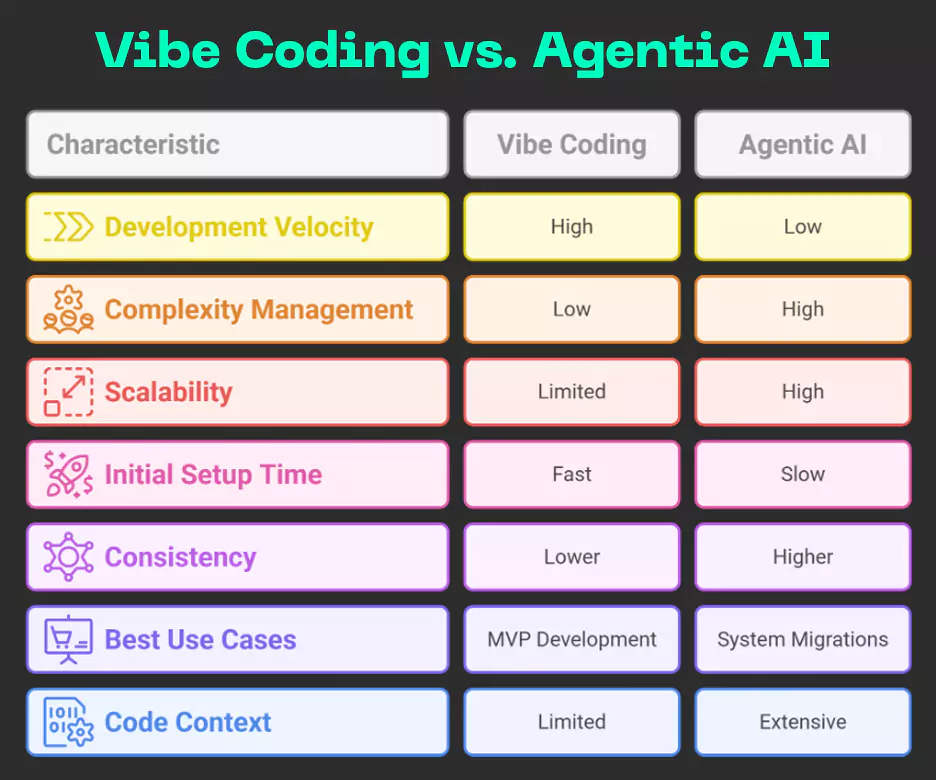
Core Features: What VibeCoded Orchestrator Actually Does
Below are the six core systems that make VibeCoded Orchestrator the most complete free AI developer tool available today.
-
Knowledge Graph with Weaviate Vector Embeddings
The system auto-indexes your entire project knowledge base with vector embeddings via Weaviate. Unlike most systems that require the LLM to manually decide what context to pull, VibeCoded Orchestrator proactively surfaces semantically relevant knowledge nodes based on what the agent is doing at that exact moment — and automatically strips duplicates from the same context window.
Hardware-aware embedding model selection means the system detects your available hardware and chooses the best embedding model automatically. GPU-accelerated locally if available, CPU-optimized as fallback. Zero manual configuration required.
2. Code Graph with AST Parsing Across 10 Languages
Abstract Syntax Tree (AST) parsing is performed across 10 programming languages with full support. The code graph extracts meaningful code portions — classes, functions, API endpoints, and cross-language calls — and embeds them using code-specific models for future semantic retrieval.
These are retrieved automatically before any file edit or write operation, giving your AI agent a deep structural understanding of your codebase rather than shallow keyword matching. Need more languages? Simply ask your Claude Code instance to add support — the architecture is built for exactly this.
3. Centralized Secrets Handling with Zero Leak Guarantees
Secrets are stored in the launcher's files, completely inaccessible to the LLM. Multiple code guards prevent secrets from leaking into Claude's context window, your GitHub repository, generated documentation, or any other output. This is one of the most critical and most underrated features for any team working with APIs, credentials, or sensitive client data.
At Codiantech, secrets management is a non-negotiable in every AI development project we deliver. VibeCoded Orchestrator makes this the default, not an afterthought.
4. Parallel Subagents via Git Worktrees
Spawn multiple Claude Code subagents running in parallel, each tracked in its own Git worktree. The Orchestrator manages coordination automatically. Run connector builds, test suites, and documentation generation simultaneously instead of sequentially. For complex projects, this alone can cut delivery time significantly.
5. Multi-Project Launcher for Teams and Agencies
A dedicated launcher executable handles multiple projects from a single interface — per-project or shared secrets, knowledge bases, code graphs, and container services. Switch contexts cleanly without losing state. Essential for agencies and development teams managing multiple client codebases simultaneously. Codiantech uses exactly this kind of centralized project management approach across all client AI engagements.
6. Code Guards for Risky Operations
Instead of letting Claude execute potentially destructive terminal commands autonomously, code guards intercept risky operations and surface what to run manually. Humans stay in the loop where it matters — without slowing down the rest of the workflow.
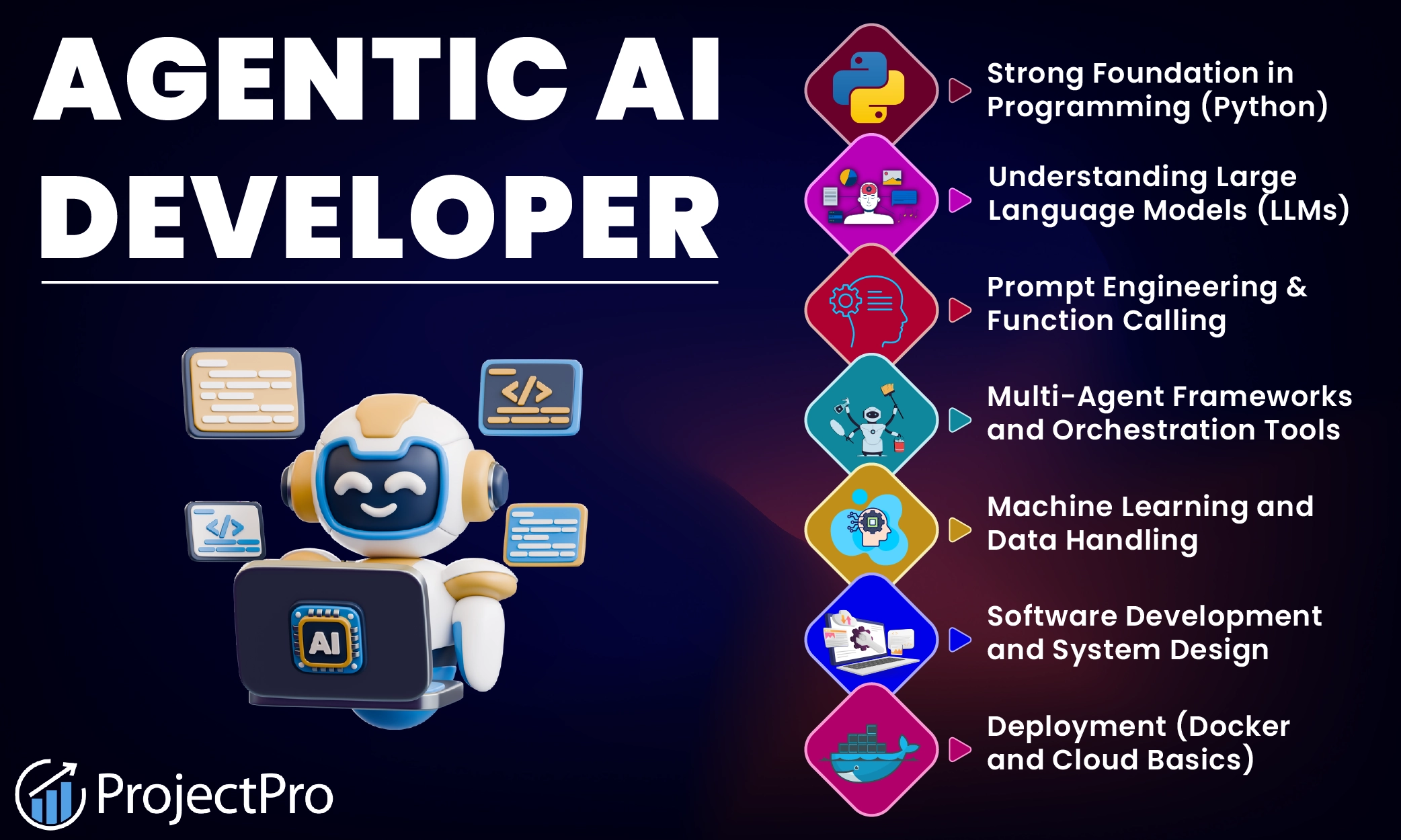
Context Management and Graph-Based Memory: The Core Problem Solved
Context management is the central unsolved problem in production agentic AI. Most LLM wrappers either dump everything into the context window — expensive and noisy — or rely on the model to decide what to retrieve, which is unreliable. VibeCoded Orchestrator takes a third path: proactive semantic retrieval driven by hooks.
When the agent is about to touch a file, a hook fires, queries the code graph for structurally related functions and classes, and injects only the highest-relevance nodes — already deduplicated — into the context. The knowledge graph does the same for documentation, decisions, and project-level knowledge.
The result is a context window that is dense with actually relevant information, not padded with noise. This is the kind of infrastructure Codiantech builds into custom AI development pipelines for clients — systematic, local, and fully auditable.
Free vs Pro: What You Get at Each Tier
Free Tier — Forever
Full knowledge graph with Weaviate and vector embeddings. Code graph with AST parsing across 10 languages. Proactive context injection via hooks. Centralized secrets management with multi-layer code guards. Parallel subagents via Git worktrees. Multi-project launcher executable. Windows and Linux installer with experimental macOS support. Code guards for risky terminal operations.
Everything a solo developer or small team needs. Completely free, no account required.
Pro Tier Coming Soon
The Pro tier adds a pretrained neural network that learns to rerank memory retrieval based on what has actually been useful to you across your specific projects. This is continuous reinforcement learning on retrieved knowledge nodes personalized per developer, per project. Revenue from Pro goes directly back into the open-source core. The free tier stays comprehensive.
How to Get Started with VibeCoded Orchestrator
System Requirements
You will need Podman or Docker, Python, and npm installed on your machine. The installer attempts to auto-install missing dependencies on Windows and Linux, prompting you for anything it cannot handle automatically.
Three Ways to Install
Option A — Guided Installer: Run the provided OS installer. A first-start wizard walks you through project configuration step by step. Tested across a range of machines on Windows and Linux.
Option B — Claude Code Self-Install: Point Claude Code at the cloned repository. The repo ships with full instructions for Claude Code to complete the install autonomously — no manual steps required.
Option C — Manual Clone: Clone directly into your project folder and use immediately. The launcher is optional for single-project use, though recommended once you work across multiple codebases.
How VibeCoded Orchestrator Fits the Broader AI Landscape in 2025
The conversation around AI agents and agentic AI has matured significantly. Claude AI, OpenAI, GitHub Copilot, Google's AI offerings, Character AI, Gemini, and Poly AI have made powerful models accessible to virtually everyone. But accessibility does not equal reliability for complex, multi-step engineering tasks.
The real bottleneck for developers building with AI is not model quality — it is the surrounding infrastructure. How does the agent know what it already did? How do you stop it from reading your API keys? How do you run three parallel workstreams without merge chaos? These are engineering problems, not model problems, and they are what VibeCoded Orchestrator solves.
In a landscape full of AI editors, chat assistants, and orchestration platforms — from Copilot to Perchance AI to Hermes AI to open-source alternatives — VibeCoded Orchestrator occupies a specific and underserved niche: infrastructure for developers already using Claude Code who want to dramatically raise the ceiling of what a single agent session can accomplish.
If reading this sparked ideas about what agentic AI could do for your business or product, Codiantech can help you build it. We are a technology company specialising in AI-powered software development, LLM integrations, and intelligent business systems.
Our Core Services Include
Custom AI agent development and LLM integrations. Multi-system data pipeline and API connector builds. Knowledge graph and semantic search implementations. Secure, role-based AI interfaces for business operations. Laravel, React, and Next.js development with AI layers. Agentic AI workflow design and deployment. Operational intelligence systems for data-driven businesses.
Whether you need a standalone AI feature or a full operational intelligence platform, Codiantech delivers production-grade solutions — not prototypes. Contact us to discuss your project.
Frequently Asked Questions About VibeCoded Orchestrator
Does VibeCoded Orchestrator Work With Models Other Than Claude?
The system is built around and optimized for Claude Code — Anthropic's VS Code extension. Claude AI is the engine; the Orchestrator is the infrastructure layer around it.
Is My Code Sent to Any Cloud Service?
The knowledge graph, code graph, and embedding models all run entirely locally on your machine. Your code never leaves your environment. Only LLM inference goes to Anthropic's API, exactly as with standard Claude Code usage.
How Is This Different From Other Multi-Agent AI Frameworks?
Most frameworks focus on orchestrating many LLM calls across many models. VibeCoded Orchestrator focuses on maximizing what a single well-equipped agent can do — better context, better memory, better safety — while also supporting parallel subagents where genuinely useful. It is depth over breadth.
What Programming Languages Does AST Parsing Support?
Ten languages with full support out of the box. Additional languages can be added simply by asking your Claude Code instance to extend the parser — the architecture is designed for straightforward extension.
When Is the Pro Tier Launching?
Once tax and legal infrastructure is in place. The neural reranker is fully built; the commercial wrapper around it is the remaining work. The free tier is complete and fully functional in the meantime.

Comments (0)